There’s a cemetery in Stull, Kansas where, o
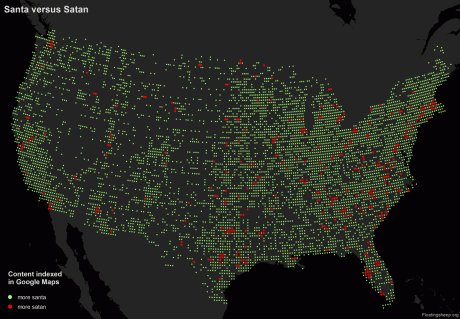
nce a year, the devil sashays out a gate to hell and MCs a homecoming dance for the damned. There’s a drainage pipe in Clifton, New Jersey that leads to a secret network of underground corridors – corridors that wend down through earth into the accursed depths of the netherworld. There are seven evil fence gates in the forests of York, Pennsylvania that, when entered consecutively, usher the adventurous onto the plains of Hades. Why would someone want to find a doorway to the pit (aside from the outside chance of a gift shop)?
I wish I could’ve asked the 150 or so revelers who gathered in Stull’s cemetery on March 20, 1978. Or the group of TV news reporters that was ejected from the privately owned graveyard on October, 31, 2002. These rowdy gatherings of Satan-hungry looky-loos began in 1974, when The University Daily Kansan, Kansas University’s student paper, published a piece detailing the local graveyard’s nefarious reputation as one of two places (the other being somewhere in buttfrack, India) where the devil has been known to appear in-person, either on Halloween (lame) or the vernal equinox (acceptable).
According to legend, Stull, Kansas was once called Skull, Kansas (Wrong. It was called “Deer Creek Community”), and the Skull, Kansas cemetery was the site of a grisly event – a stable hand stabbed the mayor to death (Wrong. Stull has never been incorporated and, as such, has never had a mayor). Other Stull-centric legends include the birth of a deformed demon baby, now, appropriately, buried in the dread graveyard, a cornucopia of witch executions and a rumor that, in the early ‘90s, Pope John Paul II ordered a cross-country flight redirected so that the aircraft wouldn’t pass over the Kansas town’s blighted soil. (Wrong. He had the flight re-routed so he could flush the toilet over the actual evil that is Oskaloosa, Iowa.)
Stull locals regard the legends as, alternately, hokum, bunkum and snorkum (a regional idiom), while Stull tourists are convinced that the locals are just, like, saying that to cover up the truth, man. The Satanic stalemate is only furthered by the town’s zero tolerance policy for cemetery trespassers, a fact that’s been used again and again as evidence that, at least in the graveyard, folks aren’t in Kansas anymore… and the townsfolk know it.
Alternately, the answer to my question, why oh why seek a gate to hell? Humba humba hum (that’s my new single. I’m multi-tasking) could be sought out in Clifton, where the local rainwater drainage system is rumored to hold a maze of catacombs chock full o’ human remains, lit candles, medieval weaponry and even demonic sentinels. Bonus: somewhere in the labyrinth is
a bona fide passage to the Inferno. Over the years, the legend has proliferated thanks to coverage in Weird New Jersey magazine and whip-it-fogged teenagers, who cover the tunnels in messy pentagrams and spray-painted “Gate to Hell” signs, including helpful arrows pointing down into the darkness. Local kids use the lengths of tunnel as a ruler for courage measurement – a folklore-enhanced pissing contest designed to organize a social hierarchy based on pipe-distance-travelled. Likewise, York County, PA’s seven gates of hell dare scared kids to charge through the very real fence gate on Trot Run Road and freak out in the woods at night – the only time when the six subsequent gates become visible to man. Pass the seventh gate, and find yourself in Lucifer’s breakfast nook.
Suffice it to say, there’s something enticing about the idea of hell as a physical place, with skirtable borders, surveyable zip codes and, most importantly, a visible town center. As such, there are innumerable stories like the above – creepy tales traded by teens in the name of reshaping familiar geography into a mysterious (but navigable), deadly (but survivable) unknown. Other legends have taken this idea even deeper, mining mortal terror from the very core of the Earth.
Wednesday: Drilling to Hell