Most of us are never going to get the chance to hop inside any of Space X’s amazing space vehicles and just sit there like little kids in the coolest toy store ever.
Go visit, take a look around and linger (images will transistion revealing airlocks, storage lockers opening and more) over the interior of a vehicle which is heralding one amazing future.
Several months ago, people had claimed to see flying humanoid figures in the skies. Most of the viral surge was from various consipiracy groups online. It turned out to be simple, flat, human-shaped RC planes.
We have a feeling that same group is going to be salivating over stories about a flying dragon.
No joke.
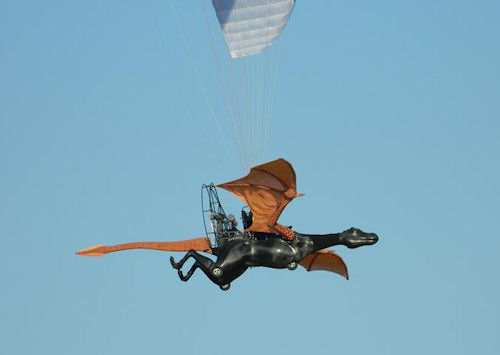
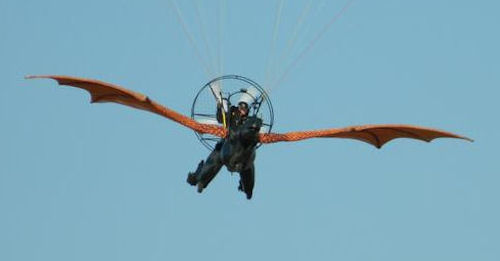
A flying dragon has been spotted in California at Minter Field Airport.
Obvious from the image above is that it’s not a real dragon but a weird hybrid of a paraglider’s parachute, a swamp boat and a dragon. It’s like the much bigger, cooler brother of the R/C dragon we reported on a while back.
According to a local newspaper near the airport where the dragon’s been spotted actually spitting fire, Disney Imagineers are the sorcerer’s behind this piece of awesome.
Patents were filed earlier this year for the vehicle showing details but Disney is keeping very hush about whatever project the Imagineers are up to that would involve the need for a flying dragon.
“I can’t really tell you much. So sorry,” Disney spokeswoman Angela Bliss said Thursday, confirming only that what people around the airport saw (she never used the word “dragon”) was a project of Glendale-based Walt Disney Imagineering.
“We’re really always looking for new ways to expand the magic at Disney Parks,” Bliss said. “But we really don’t have any specific comments about what you’re asking me about.”
The Minter Field general manager won’t talk about the dragon based on a confidentiality agreement but that hasn’t stopped people from talking about the fabled creature buzzing the airfield.
Pilot Patrick Wiens says he’d never seen anything like before. Neither had the people who’ve talked to him about it in casual conversation.
Wiens said, “They had never seen anything like it, either.”
Are you ready to terrorize a small medieval village? How about set fire to your enemies? Threaten the slave city of Astapor?
Is this the RC toy for you!
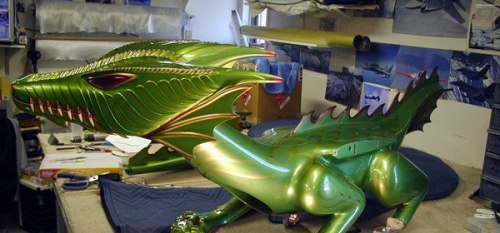
It flies. It breathes fire. It looks like a dragon.
Named “Mythical Beast” this bad motherhuncher is designed by Rick Hamel. Get some more of the technical deets at the Jalopnik link below. In the meantime, check out the video of Beast in action.
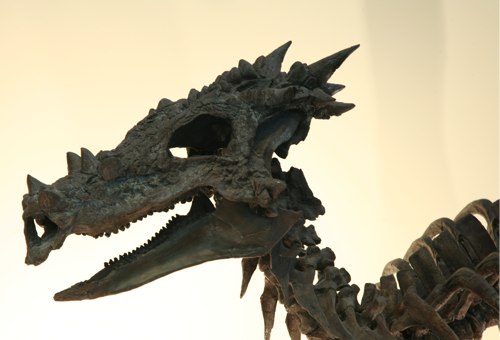
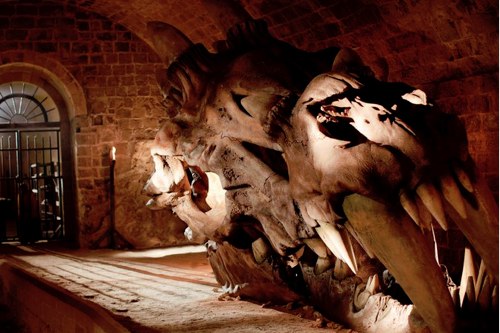
Seriously, compare the skull you see above to the massive dragon skulls found in the subterranean pathways of King’s Landing in HBO’s Game of Thrones.
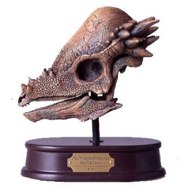
While it is inconclusive that Dracorex ever consorted with the House Targaryen or reduced cities and armies alike to smoldering ash, what is clear is how much the shape this herbivore bares a resemblance to our common understanding of a fictional dragon. The skull was first donated for study in 2004 and was formally described first in 2006.
Meanwhile, the beast has a more permanent connection to yet another popular fantasy franchise. The official name for Dracorex is Dracorex hogwartsia. This was inspired by young visitors to the Children’s Museum of Indianapolis, where it was official donated, who kept referring to it as the dragon from the book and subsequent 2005 film adaptation Harry Potter and the Goblet of Fire.
This thrilled author J.K. Rowling…
“I am absolutely thrilled to think that Hogwarts has made a small (claw?) mark upon the fascinating world of dinosaurs. I happen to know more on the subject of paleontology than many might credit, because my eldest daughter was Utahraptor-obsessed and I am now living with a passionate Tyrannosaurus rex-lover, aged three. My credibility has soared within my science-loving family, and I am very much looking forward to reading Dr. Bakker’s paper describing ‘my’ dinosaur, which I can’t help visualising as a slightly less pyromaniac Hungarian Horntail.”
But the question remains, is Dracorex really even its own species?
All around dinosaur badass authority and HPIC (Head Paleontologist In Charge) of our hearts Jack Horner says the beast is probably just a juvenile version of the well documented dino Pachycephalosaurus which looks decidedly less dragon-esqe.
In fact, he has an awesome TEDx talk going into the phenomenon of misclassification and our misunderstanding of “shape shifting” dinosaurs.
So what came first? Our modern dragon myth that looks like Dracorex? Or did Dracorex shape the myth? Is Dracorex even really Dracorex?
No matter what, we now know something that Daenerys Targaryen, Jack Horner and Harry Potter have in common. Which is pretty awesome.