For decades, the Nain Rouge leap-frogged one disaster to the next, always arriving in time to pre-empt tragedy with some goggle-eyed nose thumbing before evaporating into the high drone of an emergency broadcast signal, and for decades, from one disaster to the next, Detroit marshaled and rallied and summoned hope up out of the ashes and bones of the city’s past. In July of 1967, everything changed.
What should have a been a routine raid on an illegal bar turned into a five day riot that ended with the deployment of National Guard and U.S. Army troops. Fueled by festering racial tensions that were only exacerbated when the Detroit police, a source of friction to begin with, started making mass arrests, the riot surprised the entire country – urban living statistics coming out of Detroit portrayed it as a diverse, racially integrated wonderland. (Ultimately, the fault didn’t lie in the numbers, but in rampant, unquantified everyday prejudice, including frequent racially based mistreatment of consumers by local merchants.) In the wake of the confrontation, which was supposedly preceded by several chortling visits from the hyperactive Nain Rouge, even the most adept statistician couldn’t argue with the 43 deaths, 467 reported injuries, 7,200 arrests and more than 2,000 immolated buildings.
Like a wounded, shell-shocked Veteran, the city never fully recovered. The crime rate skyrocketed in the 1970s and the town’s social fabric unraveled. Through much of the decline, the cheeky red gnome didn’t issue so much as a somber Bronx cheer.
For more than two and half centuries, the Nain Rouge seemed conjoined to the city, genetically tethered to it by a thin band of fiction, sharing whatever municipal organ secretes narrative dopamine in the wake of urban injury. But it’s hard to define the identity, the personhood, of a city. It lives in constant symbiosis with its citizens and the culture they mold and consume and re-mold, defining the place as it, in turn, defines them. The Nain Rouge was an identifying aspect of Detroit since its founding, a lodestone of a socio-cultural foundation that many believe to have crumbled in 1967.
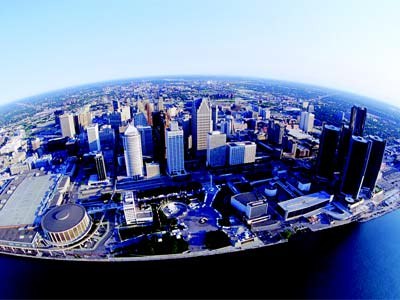
After the riots, local and state government banded together to form a committee meant to revitalize – to redefine – the city. In defiance of history, they called the group “New Detroit.” In the last three decades, only a single Nain Rouge sighting has been reported.