Archive for the ‘Star Trek’ Category

Five Characters that Must Be Offered at New Sci Fi Brothel

Thursday, December 29th, 2011

A new brothel is set to open in 2012 offering patrons the ability to make deep contact with Science Fiction beauties. It is the brainchild of Dennis Hof, the owner of the Moonlite Bunny Ranch, most prominently featured in the HBO series Cathouse.

So as this institution is erected, I figured we’d pitch a few suggestions for some of the girls we feel would be very popular with future clientele. On a side note, they should seriously just build a monorail direct from CES to this place. It’s going to look like the road the Woodstock every night of the convention.

Meanwhile…

Mary the Three Breasted Mutant from Total Recall Whichever young lady decides to park herself in the make-up chair for a few hours in the morning to get this baby pasted on is going to be saying to themselves “I wish I had more hands… to hold all this money!” Bonus: This character is actually a hooker. From Mars.

skitched-20111229-150453.jpg

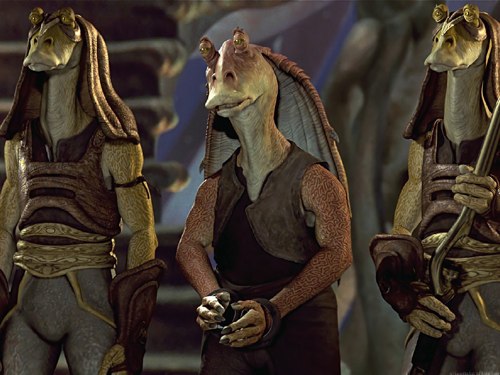
Jar Jar Binks People work out hate in the strangest ways.

skitched-20111229-145830.jpg

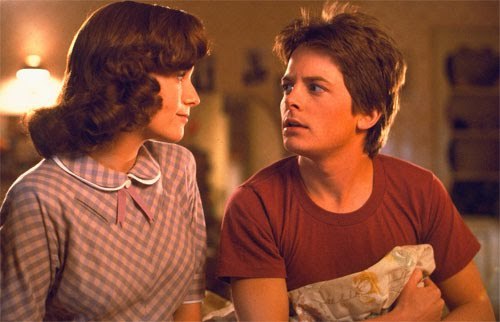
Loraine Baines Okay, it was kind of weird when she got all riled up flirting with her own son. But imagine, if that just happened to be you hit by Mr. Baine’s car and taken into Loraine’s room in 1959? Each costumer gets a free pair of underwear and the working girl promises to call you Calvin.

OR… for REALLY disturbed high rollers you execute the entire scene with their own mother. Then you can provide a childhood picture of the patron that slowly fades away.

skitched-20111229-150730.jpg

Tribbles Why shouldn’t the yiffers get a little Sci Fi bang for their buck?

skitched-20111229-145048.jpg

Orion Slave Girl This is the Big Mac of the SF sex trade. Iconic costume, fairly easy to execute and a character known not only for banging people but specifically banging Captain Kirk. Nobody minds Kirk’s sloppy seconds, if it was good enough for Picard it’s good enough for us! Aside from the various forms of Princess Leia, this is going to be your number one seller.

We are pretty sure that Hof’s establishments only offer female companionship however, if male talent is hired, we’d suggest the Doctor Manhattan special. It requires three blue dudes, two to service the customer and one to conduct a science experiment in the next room.

Thanks to everyone on Twitter who helped me with this list. I’ll see you all in Vegas!

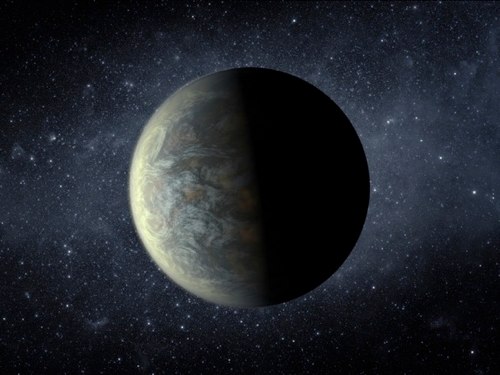
Should We Name the Recently Discovered Kepler Planets Romulus & Remus?

Thursday, December 22nd, 2011
skitched-20111222-134813.jpg

skitched-20111222-134718.jpg

There seems to be a movement afoot, begun on Space.com’s Facebook page, to colloquially refer to the recently discovered Kepler planets Kepler-20e and Kepler-20f by the Star Trek-inspired nicknames Romulus and Remus. According to Gene Roddenberry’s lore, those planets were home to the nefarious Romulans whose names were in turn taken from the twin mythological founders of Rome.

Good reasons abound.

1) it’s easier to remember for researchers who admit that even they get the order and naming of the Kepler planets confused

2) it’s easier to remember for the general populace who would be more encouraged to talk about it if they could remember the name

3) Star Trek rules

In fact, the only downside is the very real possibility that a miner baring a striking resemblance to Eric Bana will one day be born there only to see the planet destroyed despite the too-late interventions of ambassador Spock. Red eyed with revenge, he’d eventually destroy Vulcan before attempting to destroy Earth.

But other than that, we are behind it.

[Spcace.com Facebook poll]

skitched-20111222-134913.jpg

The Three Nerdiest Marriage Proposals Ever

Wednesday, August 31st, 2011

Some of you may have heard about the recent Portal 2 marriage proposal that went viral this last week, but that was not nearly the first geeky proposal. From the table top, to video games, to conventions, geeks all over are finding creative ways to get hitched. So I present to you this, a list of the best and nerdiest proposals for your enjoyment.

Engaged!

The first on the list is a proposal done at the Chicago Comic Con, at what seems to be an insignificant location. By the end of the proposal though, we see why the young couple is at Comic Con, and are pronounced engaged by a nearby celebrity!

Ring of Wedding +1

This next proposal features a young lady that wants to propose to her boyfriend in their game of D&D. She sets a trap to capture his reaction, and is ready to pop the question. During their game she decides to use her “Ring of wedding +1″, an item that she created especially for the proposal.

Forever-Bound

Now there have been many video game proposals over the years, where people who were knowledgeable enough hacked the games programming to creatively ask the question. From Marrio, to Crono Trigger, and even Halo, But this next couple can bee seen playing through the old Nintendo game Earthbound. The girl doesn’t even seem to understand what is going on, and when she does she has a hard time believing it happened. The best part of this “stupid jerks” proposal, is that at one point she even seems upset that her previous game was deleted, but all is well that ends well.

Klingon Opera Advertises By Beaming Message to Qo’noS

Wednesday, July 20th, 2011

Last year, some very, very clever Star Trek geeks sent a message to the Klingon home planet of Qo’noS via radio telescope.  They even had the world’s formost expert in Klingon, creator Mike Okrand, write and record the message for them.  And what, you may ask, did they say?  Is it an request for help developing warp technology?  establishing diplomatic relations?  Maybe a declaration of war?  No, no, all those would be stupid.  They are inviting them to see an opera.  Specifically the opera ‘u’ (Those are not single quotes around the title, they signify a glottal stop — that is, a momentary stopping of air flow in your throat, as you hear between the two syllables of English uh-oh).  So far there are some responses, but no one has made the trip from Qo’noS to see it.  Maybe they’re busy harassing a Vulcan colony world.

Futurism: Why Atom Lasers are Awesome

Thursday, January 20th, 2011

Technological advancement moves in strange ways. It’s often the technologies that come from just outside our mainstream field of vision that change things the most radically.

The properties of semiconductors were well known decades before anybody thought they’d be a great way to shrink vacuum tubes into transistors and then microchips. The implications of a really big network where everybody you know is plugged into it with PCs and mobile devices was a hard concept for anybody to fathom.

I’d like to tell you about a technology on the horizon that could be bigger than anything else we’ve seen before and make possible all sorts of crazy things like Doctor Who-like Tardis boxes that are bigger on the inside, matter replicators and line-of-sight teleportation.

It’s a technology that’s already been proven in small forms in the laboratories and now faces the challenge of finding out if it can scale without ridiculous amounts of energy.
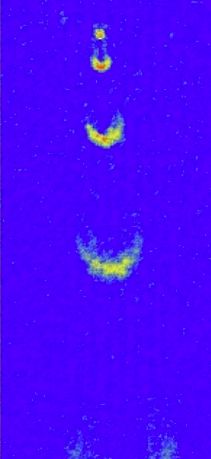
The concept began with a theory by Satyendra Nath Bose and Albert Einstein about what happens when matter gets really, really cold. Quantum physics informs us that we can never know the precise position and velocity of a particle. This means the more you know about one, the less you can know about the other. If you slowed down a particle enough and looked at it under some special microscope it would look like a blur. The act of slowing it down means that its exact position has to become literally fuzzy.

In laboratories we can see this fuzziness by creating a Bose-Einstein condensate; a bucket of atoms supercooled to the point that they behave like one uber-atom and quantum effects are magnified. One of the cool applications of this is the atom laser (it’s called a laser even though it’s not made of light).

An atom laser works by using a Bose-Einstein condensate to cool a group of atoms and then using a technique like magnetic fields or an actual laser to propagate (emit) the matter in some kind of beam. In the image you can see what a beam of sodium atoms looks like when emitted from a magnetic trap.

The potential for this is immense. It’s very much in its infancy and hard to tell what will actually become of it, but when you can reliably get matter to behave like light, amazing things are possible.

An awesome particle beam
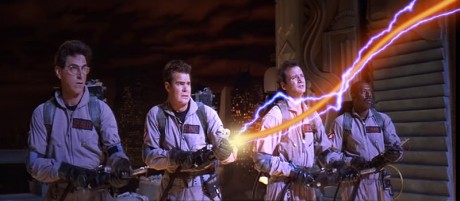
You could use this to create an incredibly powerful particle beam that would be even more precise than a laser and create smaller microprocessor components and be used to etch out things like nano-scale devices out of solid matter.
Tardis boxes
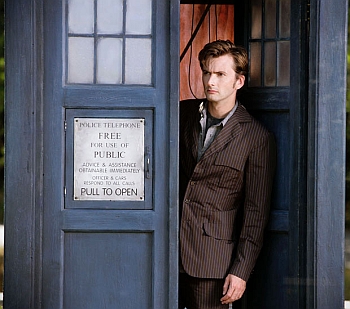
The fact that you can change matter’s position to such an indeterminate state means that you could theoretically have two particles in the same space. This could allow for matter compression where you could squeeze a large amount of matter into a confined area. Like Doctor Who’s Tardis, this would give a box that’s bigger on the inside than it is on the outside. Keeping molecules and complex structures from falling apart would be very big challenge however.
Teleportation
The ability of a matter laser to “project” beams of atoms means that a form of line-of-sight teleportation is theoretically possible. The image of the atom laser above shows a kind of crude form of that. If you could contain the beam over long distances through some other means or use a matter equivalent of a fiber optic cable, you could shoot atoms at near the speed of light from one point to another. At the receiving end the atoms are returned to a high temperature and reassembled, er somehow (see below).
Matter replicator
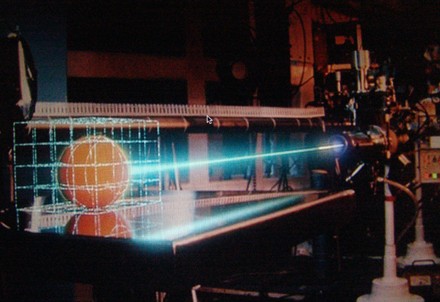
A Bose-Einstein condensate also makes interesting chemistry possible. You can cool down two different types of atoms and merge them to create molecules. You could theoretically do the same with an atom laser. Crossing beams could be used to create molecules and maybe even assemble more complex structures and build things out of scratch like the matter replicators on Star Trek.

It’s anybodies guess how far off any of these things are or even if they’ll ever happen in a way that makes it into day to day use. The biggest complications are often the unseen ones after you’ve proven what you thought was the most difficult part. That said, when the first laser was fired off in a laboratory, people could think of only a few applications for what was at that time an unwieldy technology. Decades later we can mass produce lasers for pennies apiece and use them in everything from Blue Ray players, to satellites to key chain toys.

http://en.wikipedia.org/wiki/Atom_laser
http://cua.mit.edu/ketterle_group/Animation_folder/Atom_laser.htm
Making Star Trek Possible: Warp speed without the warp drive

Friday, May 8th, 2009

A five-part series that tries to explain how to make the science of Star Trek real…

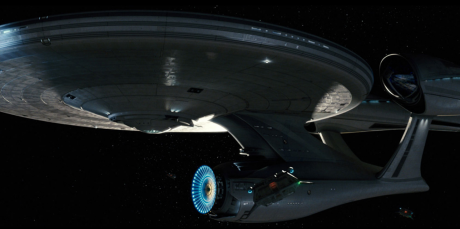
Enterprise

Probably the most fascinating idea that Star Trek popularized was the idea of a warp drive. This was a concept from golden age sci-fi that went mainstream via Trek as space-age audiences became sophisticated enough to realize that NASA’s fastest rockets wouldn’t take you very far in a human lifetime. Even going the speed of light wouldn’t work for a show that tried to visit more than one star system in it’s 3 season run (due to time dilation your characters could visit those places, but their friends back on earth would be long dead). What was needed was a (plot) device that allowed you to visit distant planets in the time it takes to drive to the next state.

Since Star Trek, warp drive has become a part of public consciousness. It’s a theoretical form of technology that some feel is as inevitable as AI and teleportation.

There’s one big catch; while AI (or something that acts like it) seems to be a problem solved at some point on a graph projecting the development of intelligent systems and teleportation seems to be more of an energy problem, there’s not a viable theory for how a warp drive could work (exotic matter, worm holes, Alcubierre drives etc.) that doesn’t violate the laws of physics (as we know them) or result in some equation balancing phenomenon like a “quantum scream” (an obscure term used in an equally obscure paper on the subject).
(more…)

Making Star Trek Possible: The Humanoid Problem

Thursday, May 7th, 2009

A five-part series that tries to explain how to make the science of Star Trek real…

Separated at birth?

In an episode of Star Trek the Next Generation called the “The Chase” a long running problem in Star Trek was finally solved – Why do all the aliens in Star Trek look humanoid. The answer was not “budget”. It was that a race that lived 4.5 billion years ago seeded the galaxy with its DNA. Humans, Vulcans, klingons etc., all got their imprint from them. We kind of look like each other because we all look like some alien race from 4.5 billion years ago. Problem solved. But is Intelligent Design really a satisfying answer?

If we find aliens that look like us, what other explanations could account for them?

Kidnapping
Having to deal with a slightly more sophisticated audience that grew up watching Star Trek, the producers of Stargate and the producers of the television series had to come up with a simple explanation for there being humans all over the galaxy in present day time. Their solution was a popular one in sci-fi literature: We were kidnapped. Over the last 100,000 years humans have been relocated to the distant corners of our universe. Once there, they go about their business. Building monuments to their gods (Star Trek and Stargate) or becoming thriving interstellar civilizations more advanced than us on earth (Iain Banks’s The Culture).

Ian Banks Matter

(more…)

Making Star Trek Possible: Practical Time Travel

Wednesday, May 6th, 2009

A five-part series that tries to explain how to make the science of Star Trek real…

Time Travel stories generally suck. There are some noteworthy exceptions – specifically stories that deal with the problems of time travel and not just time travel as a plot device (Primer, Back to the Future, to name a few).

71DDD133-1B6B-4F4F-A52F-F3DFCF47EF70.jpg

Star Trek has done some great and some very bad time travel stories. Story merits aside, there’s one big problem with most time travel stories; Transmitting people back in time (information) has no theoretical basis: It’s impossible. For every worm hole propped open with exotic matter or giant Tippler tube, someone always finds an equation to show how the universe corrects itself with quantum screams, bubbles or other annoyances that get in the way of us correcting that horrible thing that happened in 6th grade or saving the whales.

Assuming for a moment that the killjoys at MIT and Princeton who relish in pointing out that time travel as we understand it is impossible, then what? How can we tell scientifically literate time travel stories? (more…)

Making Star Trek Possible: Mind melding and ESP

Tuesday, May 5th, 2009

A five-part series that tries to explain how to make the science of Star Trek real…

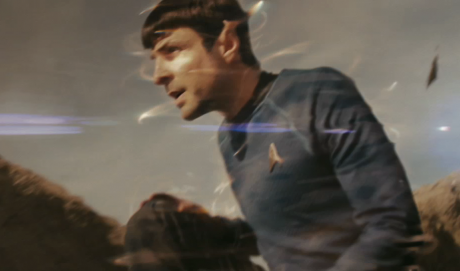
Spock's early failures at mind melding

An important part of the Star Trek mythos is the idea of mind-to-mind contact. Spock uses this to probe other people’s minds and even transplant his entire consciousness. Counselor Troi used it to read the feelings of other species. It’s a wonderful concept that has fascinated people since at least the 1800’s. Unfortunately, we’re no closer to it being real now then we were back then.

We can imagine all sorts of technology assisted ways to make this real, but there’s nothing sexy about your Vulcan girlfriend asking you to step into an fMRI so she can read your voxels (okay, maybe a little sexy). What we need are some organic solutions or explanations for brain to brain transmission that make the concept a little more plausible. (more…)

Making Star Trek Possible: 5 methods for non-quantum teleportation

Monday, May 4th, 2009

A five-part series that tries to explain how to make the science of Star Trek real…

Spock teleporting

The transporters in Star Trek are an exciting concept. Recent developments in quantum physics have made the possibility of teleporting matter a theoretical possibility while warp drive still remains a fantasy concept. However, the amount of energy required to move a person and all the other problems that go with it (engineering and ethical) leave quantum teleportation a bit to be desired for practical use. Crazy things can happen, but in the event that quantum teleportation doesn’t scale up or people are upset by the idea of their atoms being destroyed so copies can take their place, here are some slightly (we think) more practical solutions for teleportation that use way less energy and preserve your atoms:

(more…)